
Closet Compass is an outfit memory and planning tool that helps people track what they actually wear, reduce decision fatigue, and get more use out of their closet. Built with smart suggestions and lightweight logging, it makes sustainable style feel simple instead of restrictive.
Role + Scope
As Co-Founder and Chief Growth Officer, I led the work across brand, website, social, product direction, and growth experiments, partnering closely with my co-founders to take Closet Compass from early concept, to beta, and user validation.

The Story
Closet Compass started from a simple conversation in a sauna: “Why do we keep buying clothes we forget we own?”
The idea evolved into a smart outfit memory that helps people log what they wear, track rewears, and plan what to wear for future occasions, turning “I have nothing to wear” into a system, not a spiral.
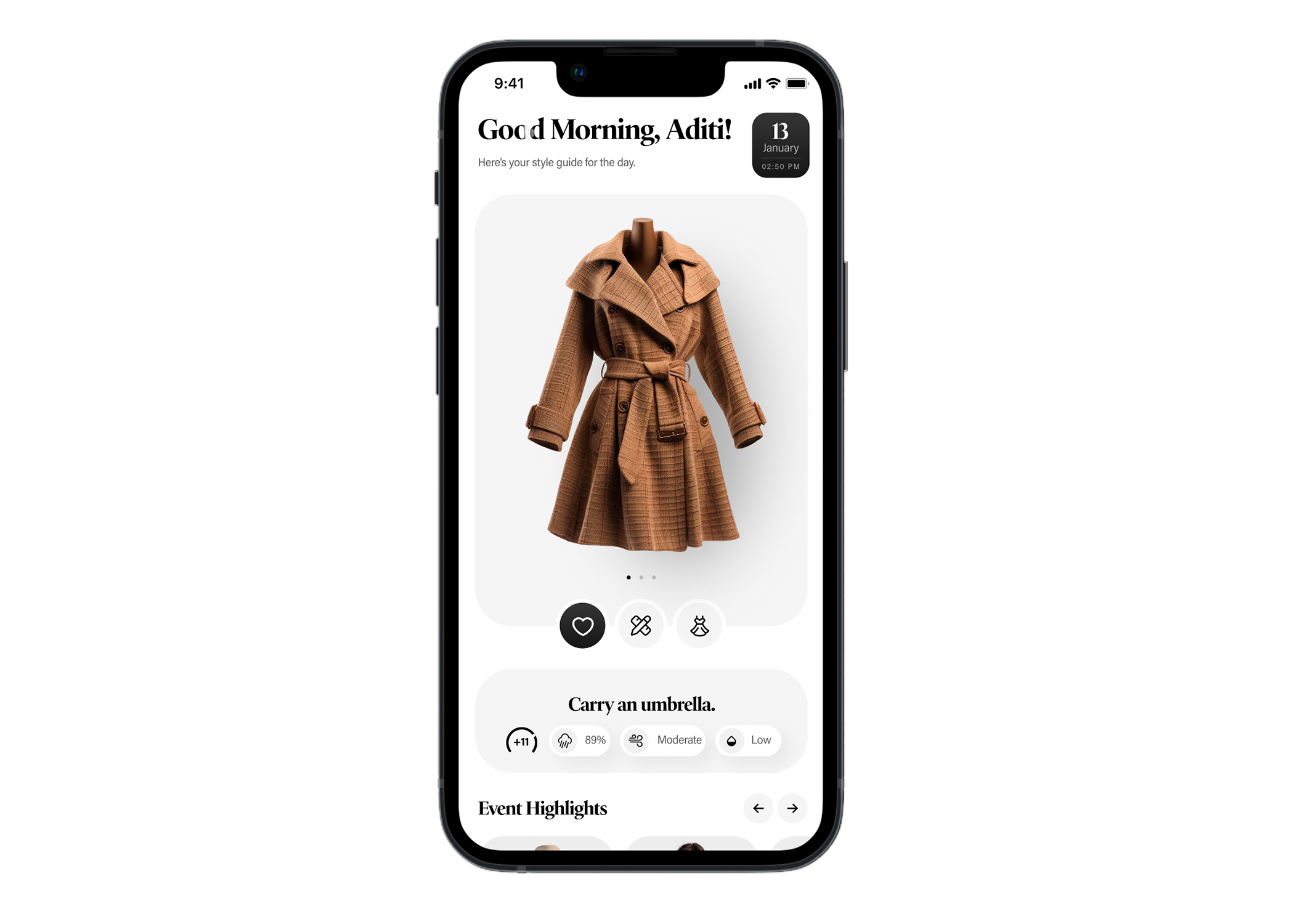
V1 of UI ~ Jan.
Brand Development
01
Goal: Make the concept instantly understandable and emotionally appealing, not techy or complicated.
What I did: Defined positioning, voice, and visual identity from scratch.
Explored logo directions, established a repeatable type / color / layout system.
Iterated on messaging until "outfit memory" communicated in seconds.
How: Iterated through naming and messaging directions, built moodboards and visual references, explored logo concepts, and established a repeatable system (type, color, layout rules) for consistent assets.
Outcome / learning: A cohesive identity that scaled across product, web, and social. Biggest takeaway was that clarity beats cleverness. The brand had to communicate “outfit memory” in seconds.
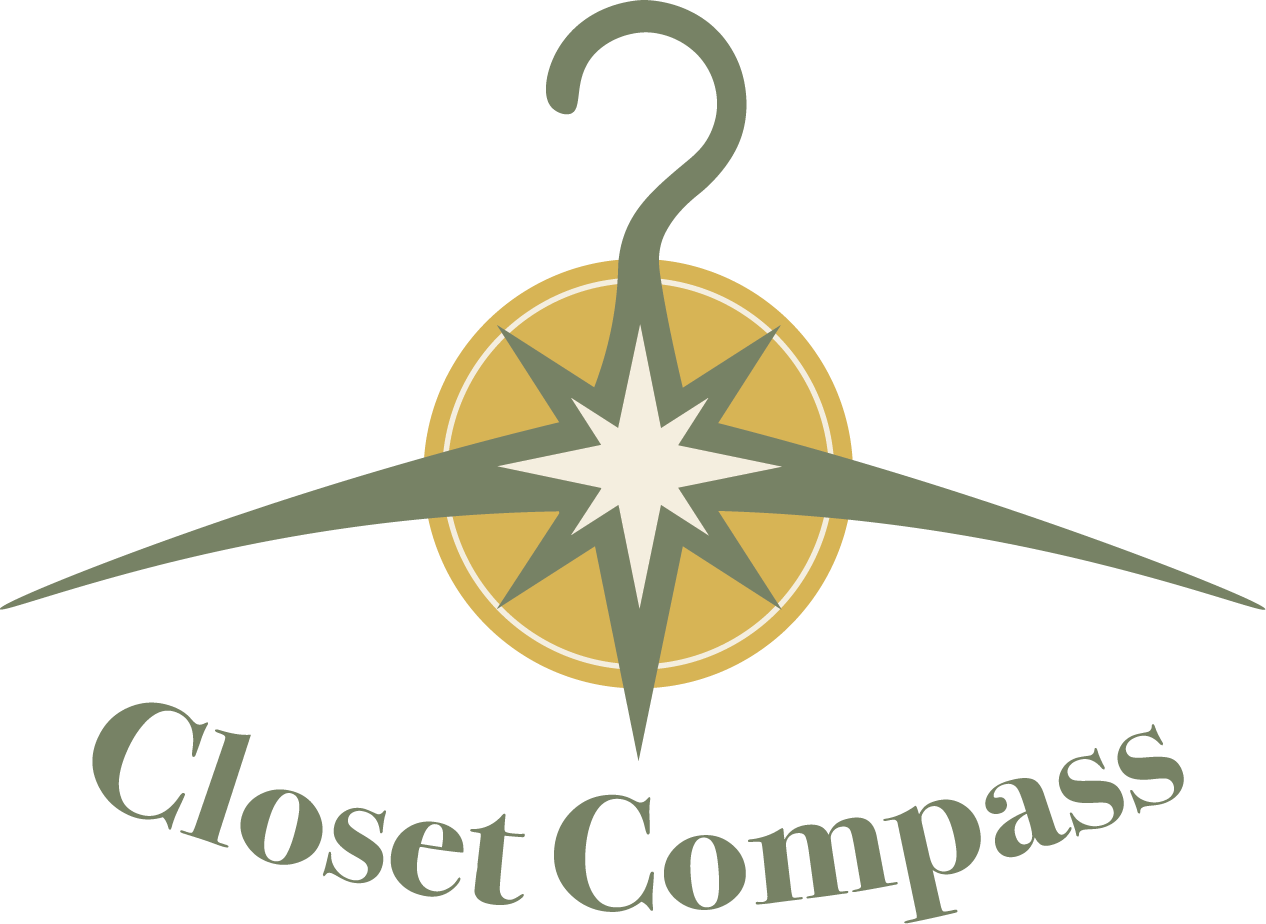
First design of logo and color scheme
Final Logo
Check out full branding guidelines here. Covers logo placement, color scheme, typography, and more
Website Design
02
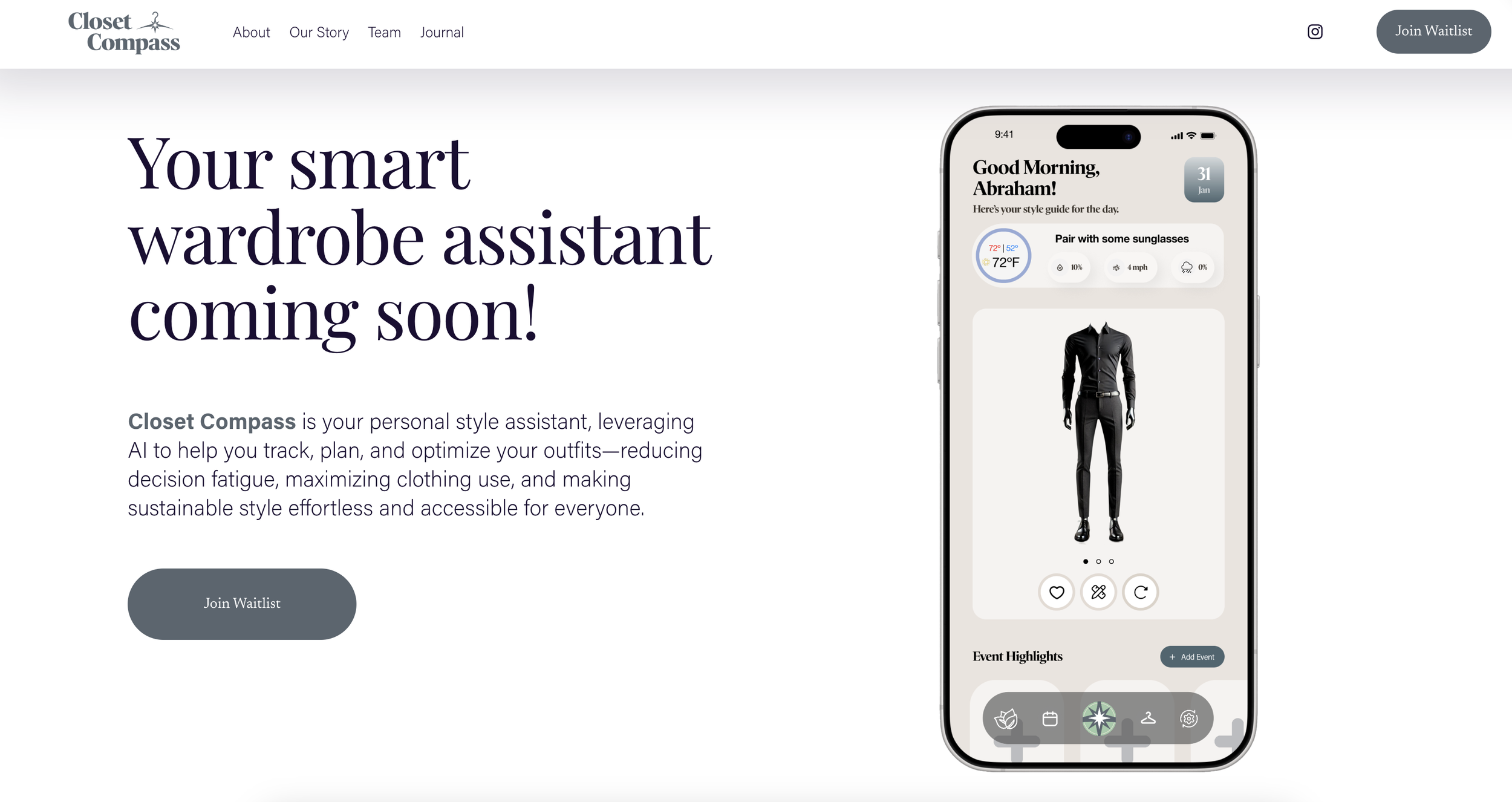
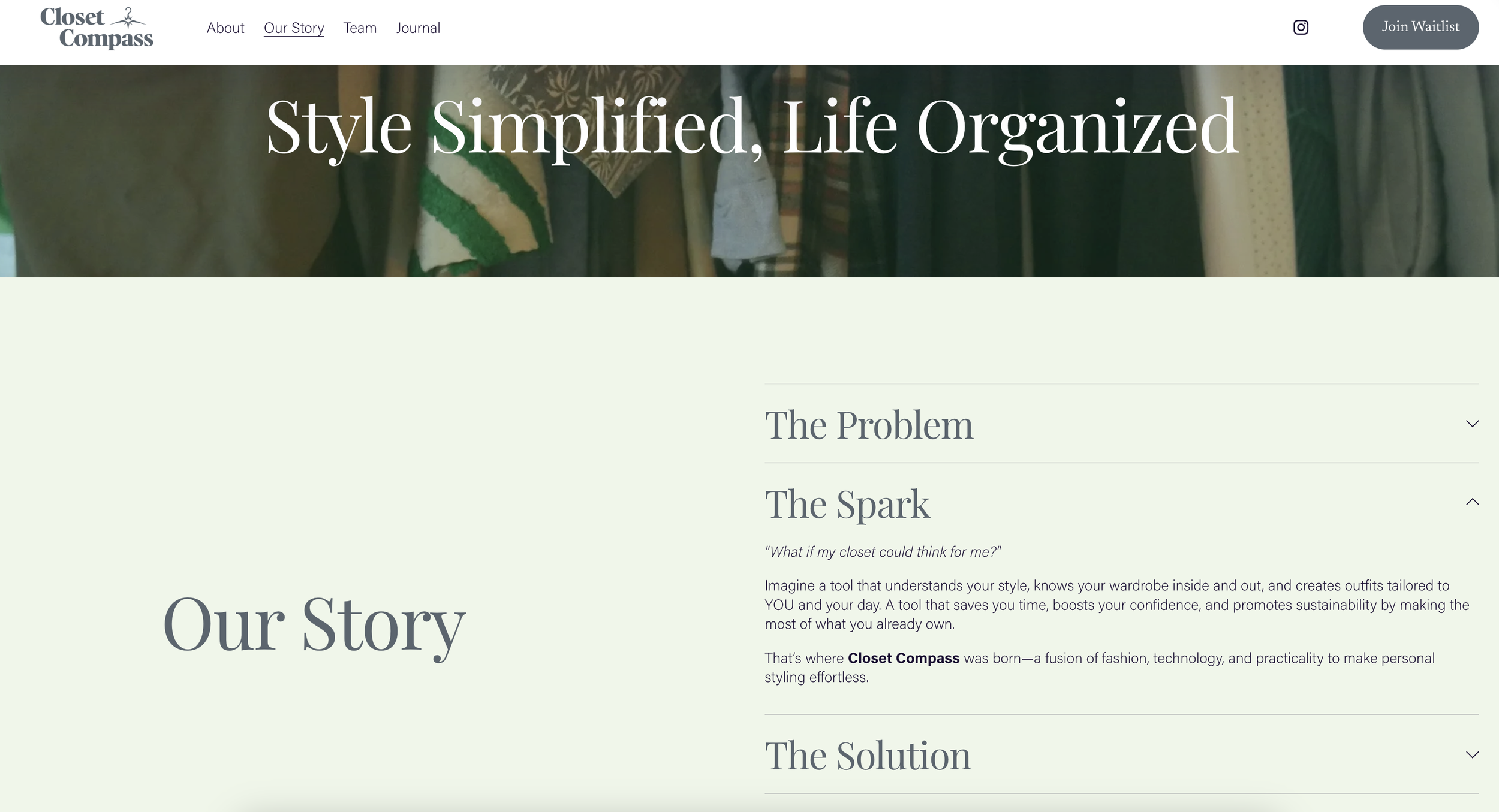
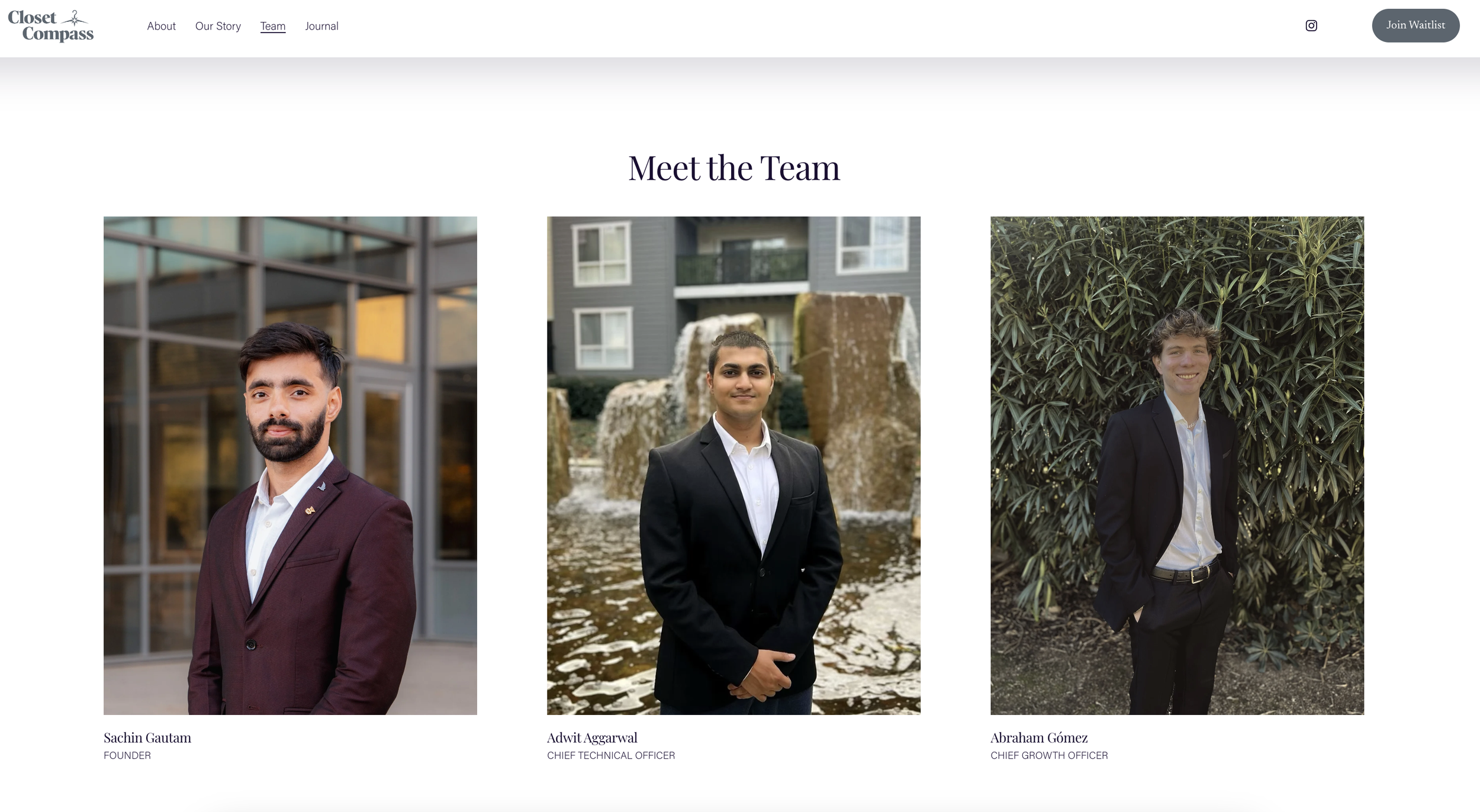
Goal: Explain the product fast and build trust with a clear action (join waitlist, learn more, watch demo).
What I did: Designed and wrote the landing experience to communicate the problem, the “aha,” and the product flow.
How: Built the site structure around a simple narrative: pain → solution → how it works → proof → CTA. Designed responsive layouts, created visuals and mockups, and aligned copy with the brand tone.
Outcome / learning: A launch-ready home base that made the idea feel real. I learned how much conversion depends on sequencing, not just aesthetics. The site needed to answer objections before the viewer even forms them.
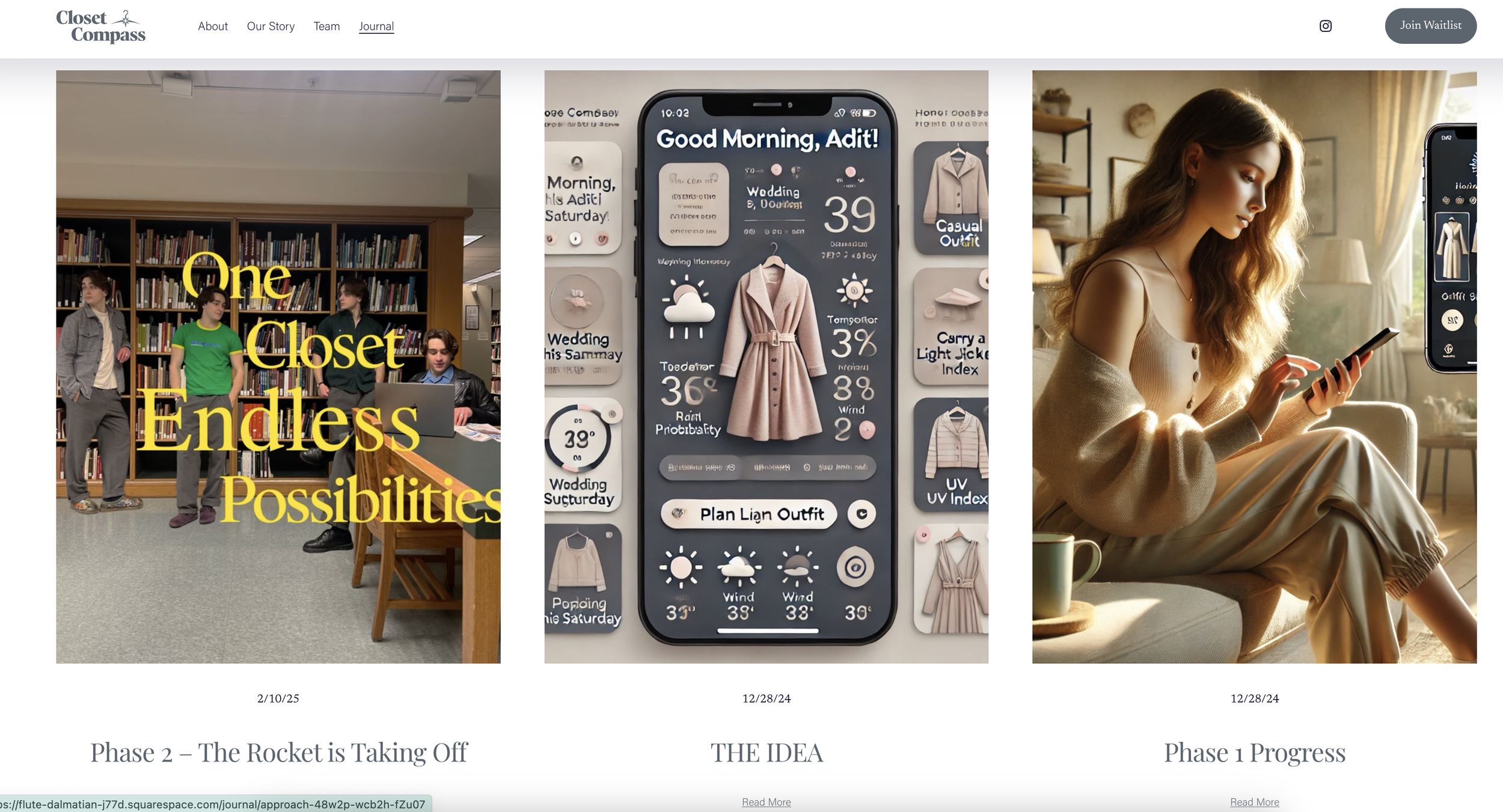
Check out the full website here
Social Media
03
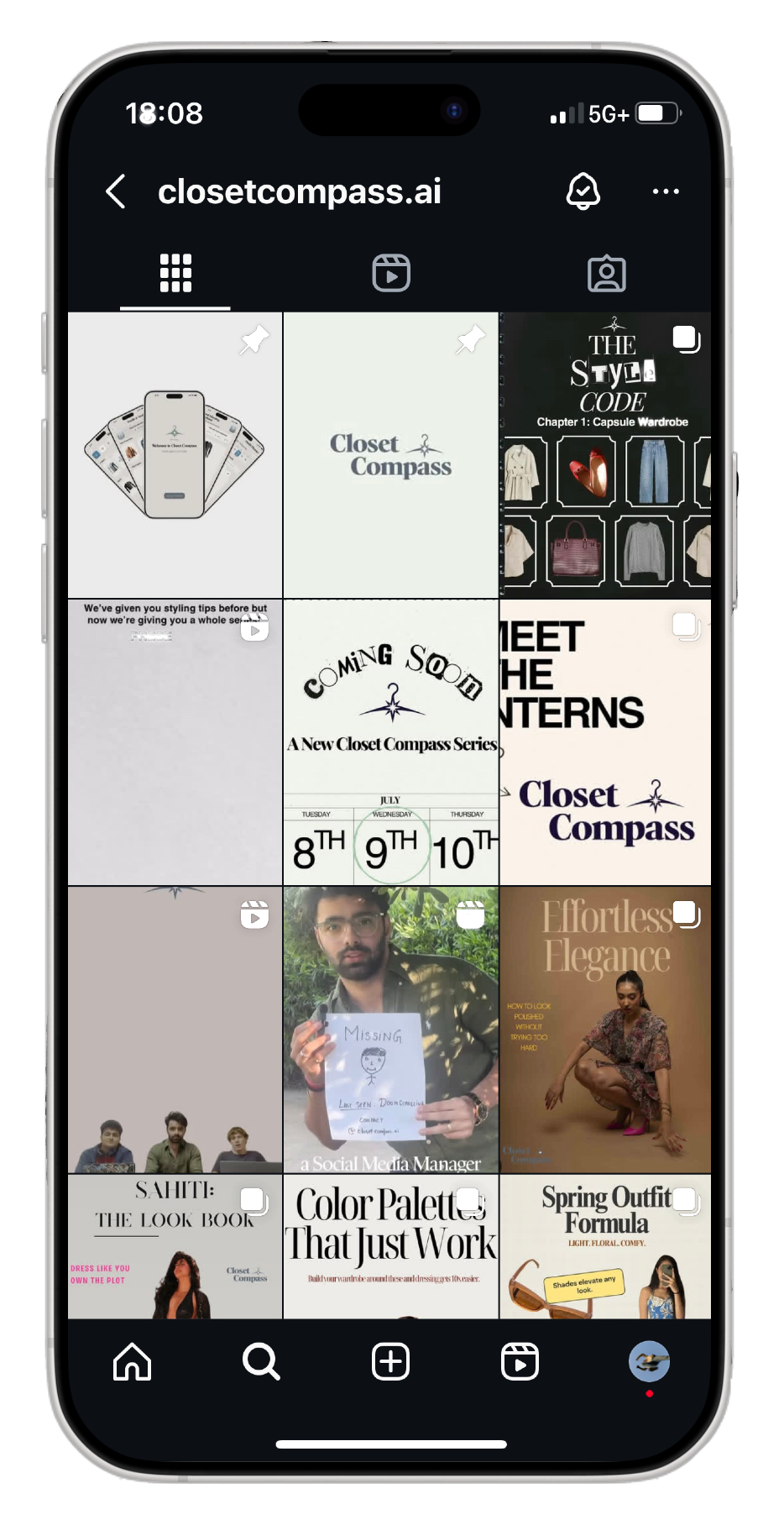
Goal: Build early awareness and test which messages make people say, “That’s me.”
What I did: Developed a content system that balanced relatability with product clarity.
How: Built templates and a lightweight content engine (hooks, formats, recurring series), created posts and short videos, and used comments and saves as signal for what to double down on.
Outcome / learning: A consistent social presence with clearer positioning over time. In 4 months, increased following from 0 to over 400. Key learning: posts that start with a real closet emotion (overwhelm, guilt, “nothing to wear”) consistently outperformed feature-first content.
Product Development
04
Goal: Ship an MVP that feels effortless to use and fits real behavior, not ideal behavior.
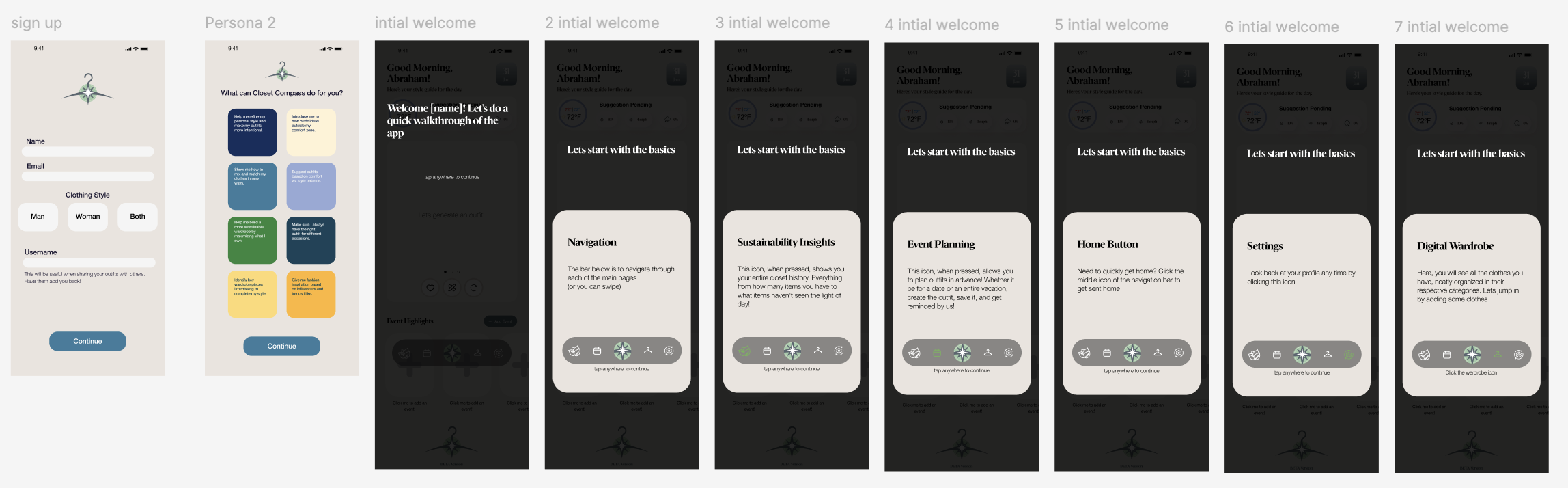
What I did: Helped shape the product experience and prioritized features that reduced friction using Figma. Designs were then sent to the CTO.
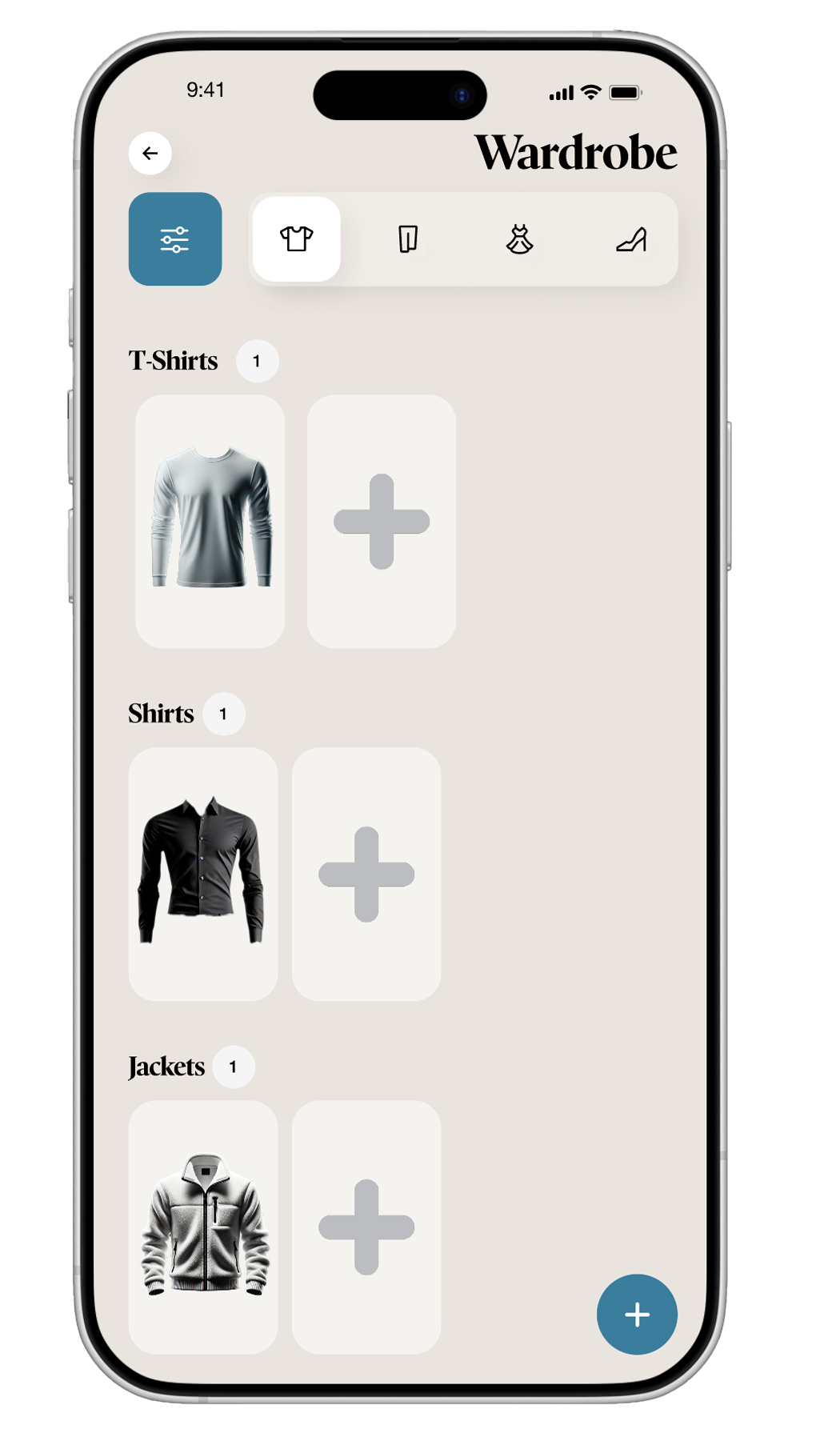
How: Mapped user flows (log outfit, plan ahead, rewear insights), translated insights into product requirements, collaborated on UI direction and iteration, and aligned product decisions with the core promise: remember, reuse, simplify.
Outcome / learning: A clearer product focus that supported the “smart memory” concept. The biggest learning was that habit-based products live or die by the first 2 minutes of onboarding.
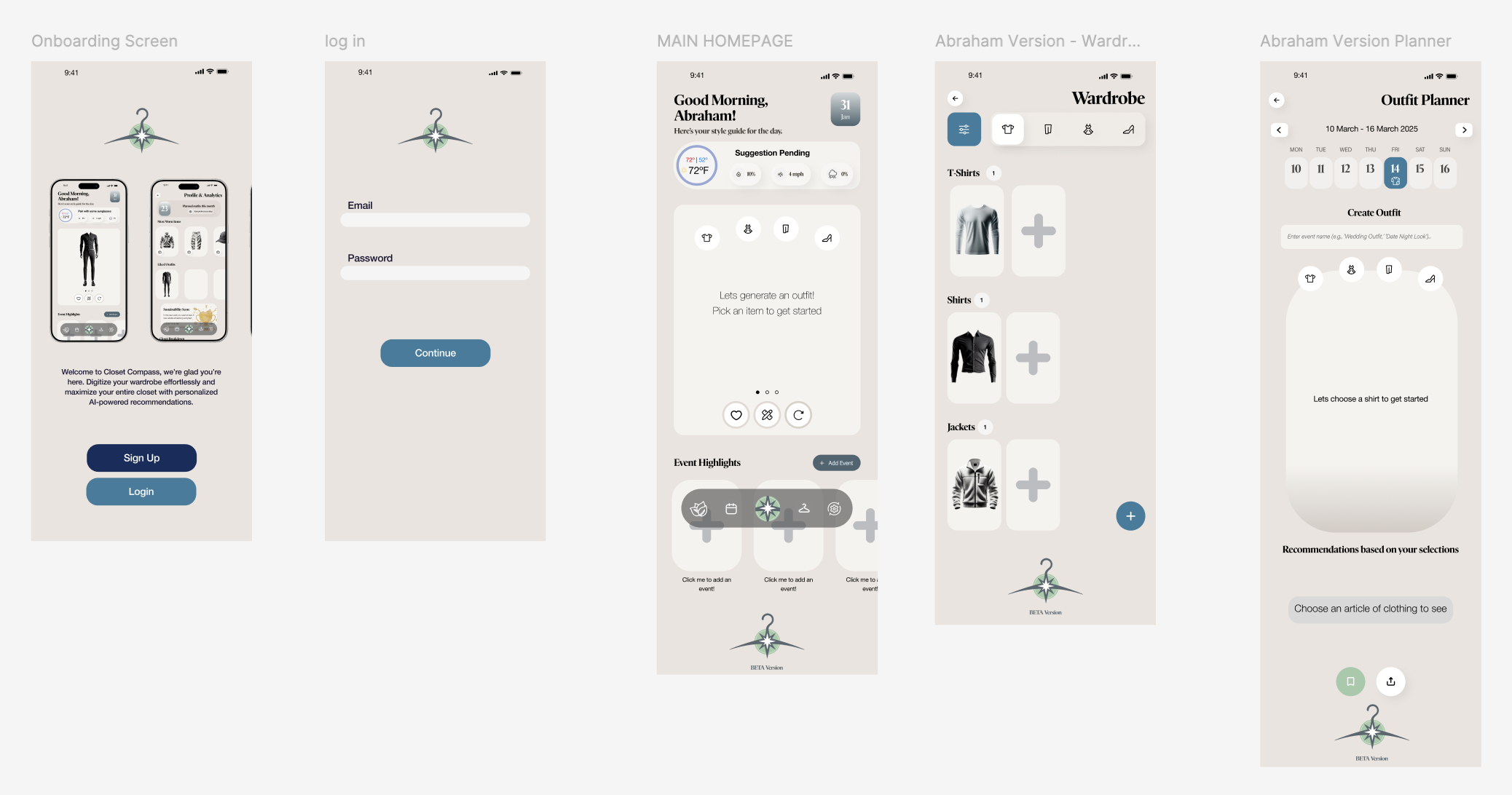
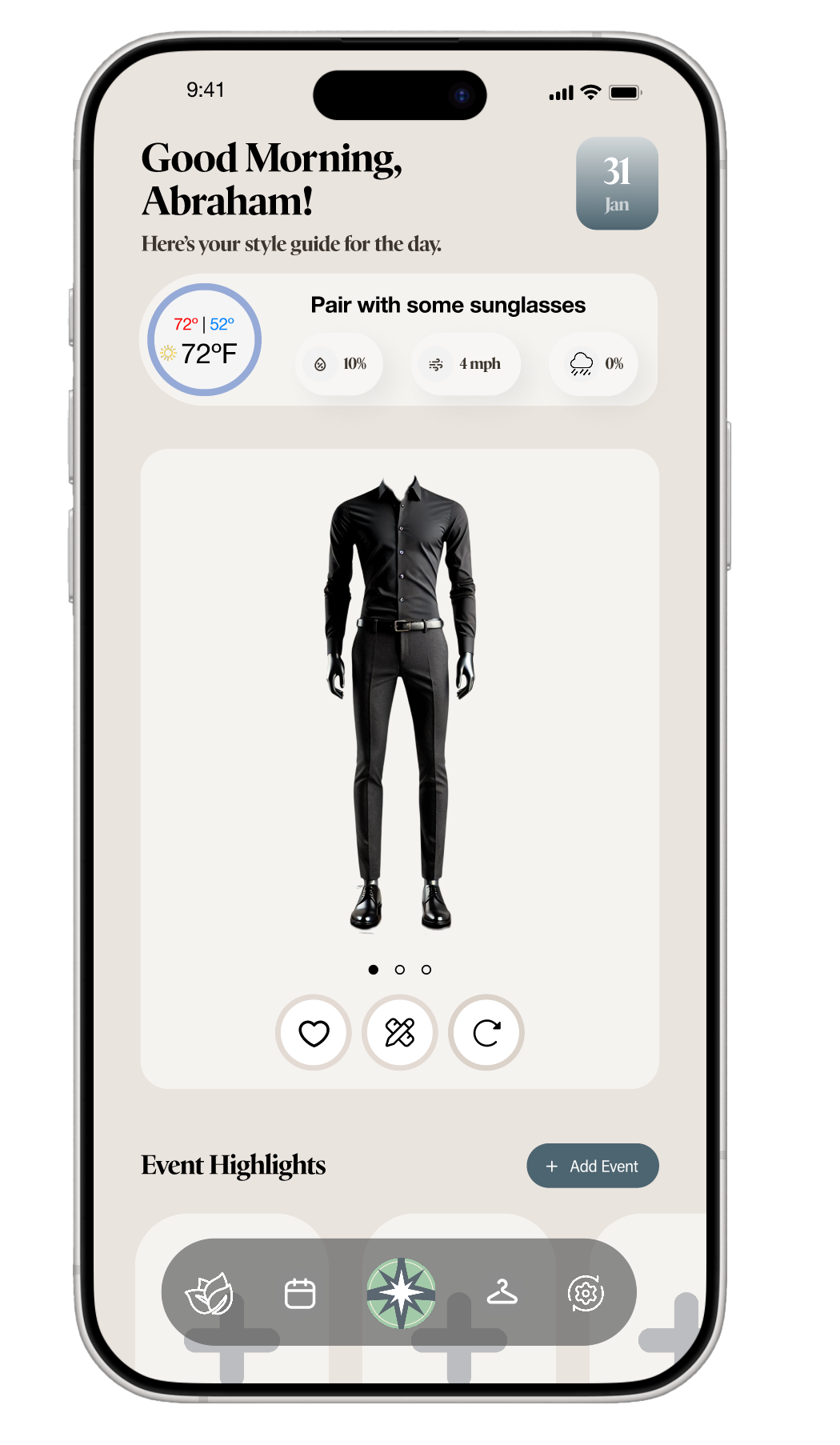
Homepage
Wardrobe
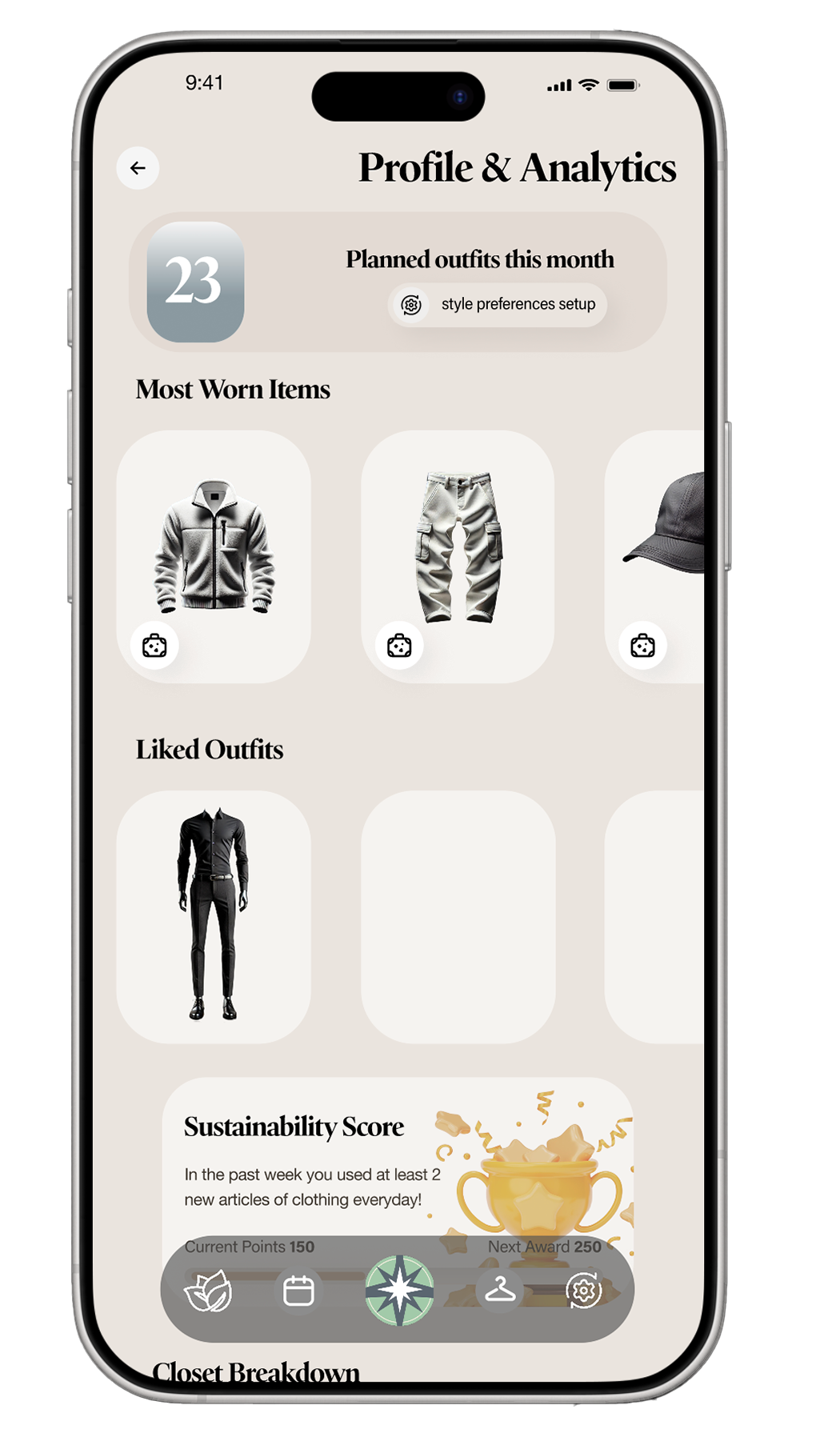
Planner
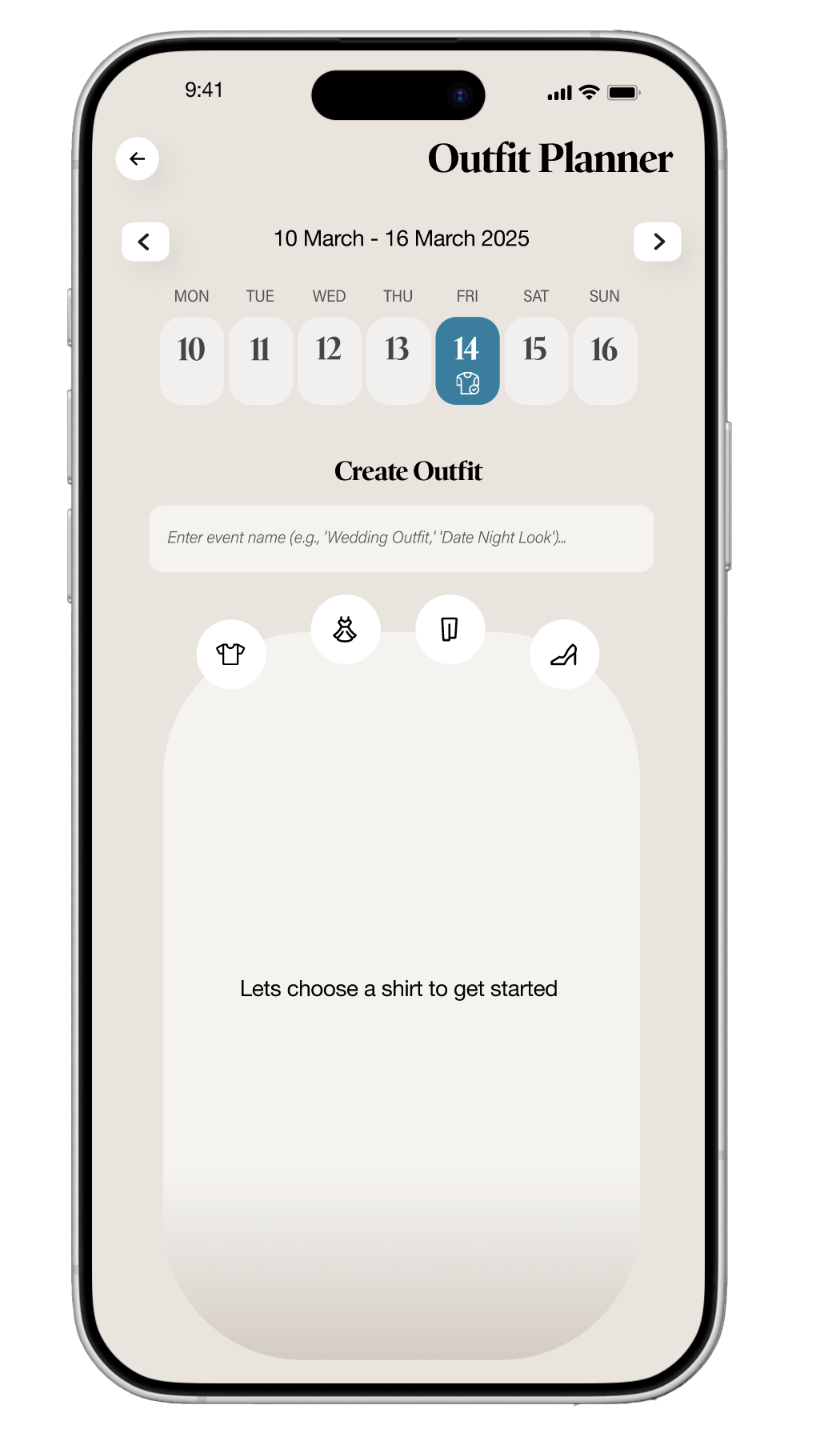
Sustainability Insights
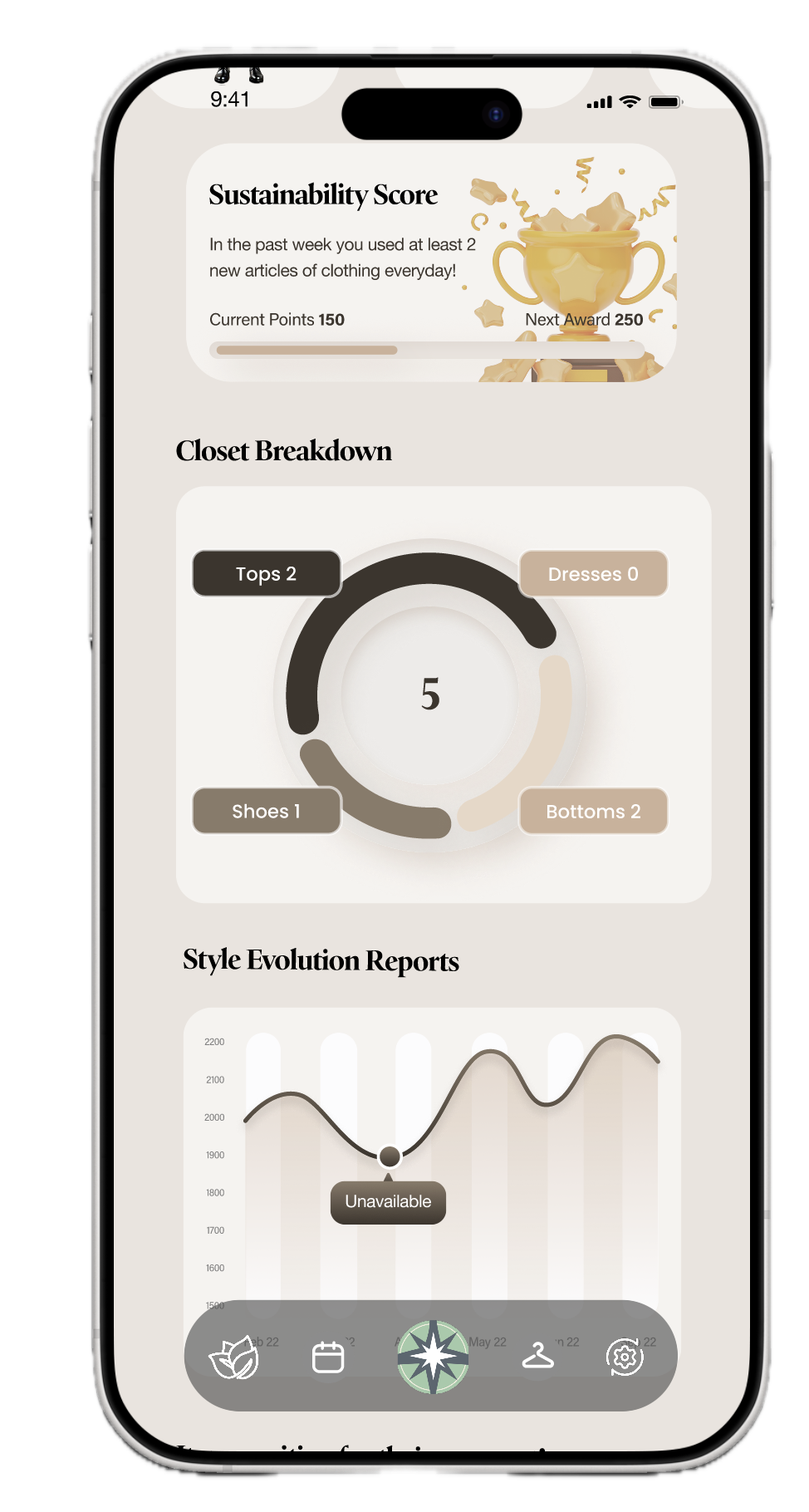
Sustainability Insights
Sustainability Insights
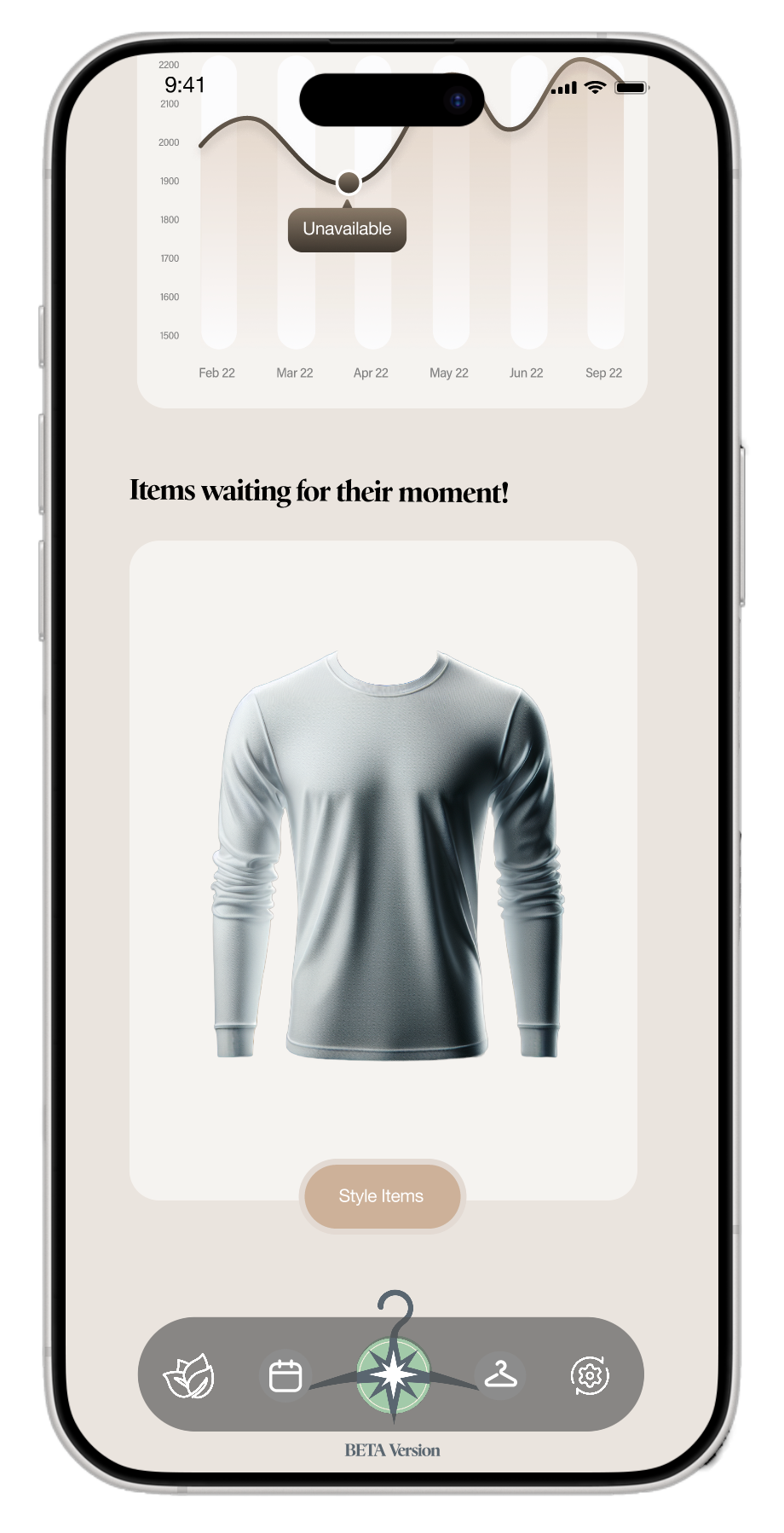
User Trials / Customer Development
05
Goal: Pressure-test our business thesis and validate the problem with real people, not assumptions.
What I did: Led customer discovery and structured validation through UC Irvine I-Corps to sharpen our direction and decision-making.
How: Completed a Business Model Canvas, conducted interviews to validate key hypotheses (who this is for, what pain is most urgent, what “success” looks like), and translated findings into clearer positioning + product priorities.
Outcome / learning: I-Corps gave us a more grounded strategy and a sharper product story. Biggest learning: validation isn’t “do people like it?” it’s “will they change behavior for it?” That insight helped us focus on making Closet Compass feel effortless and habit-friendly.
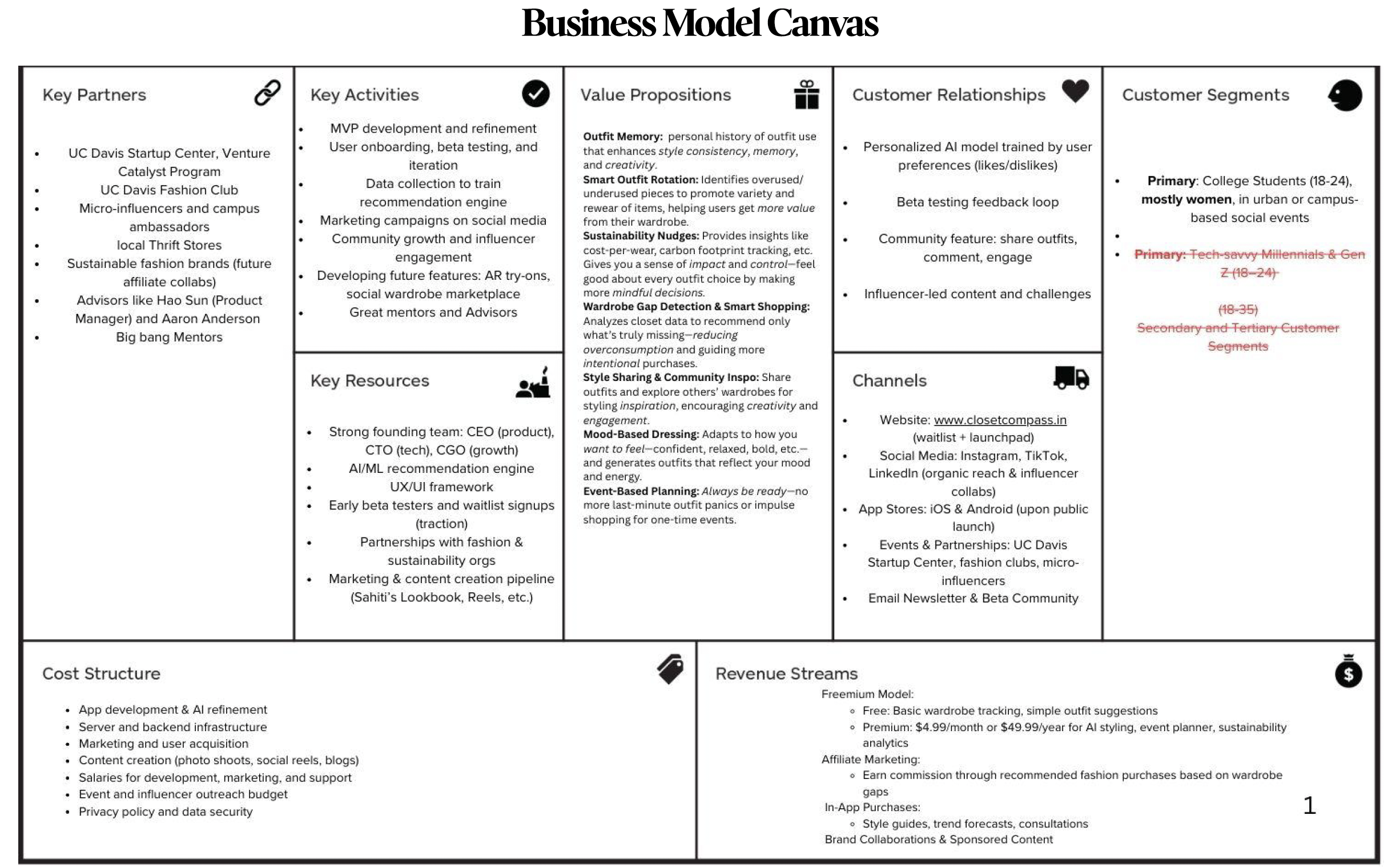
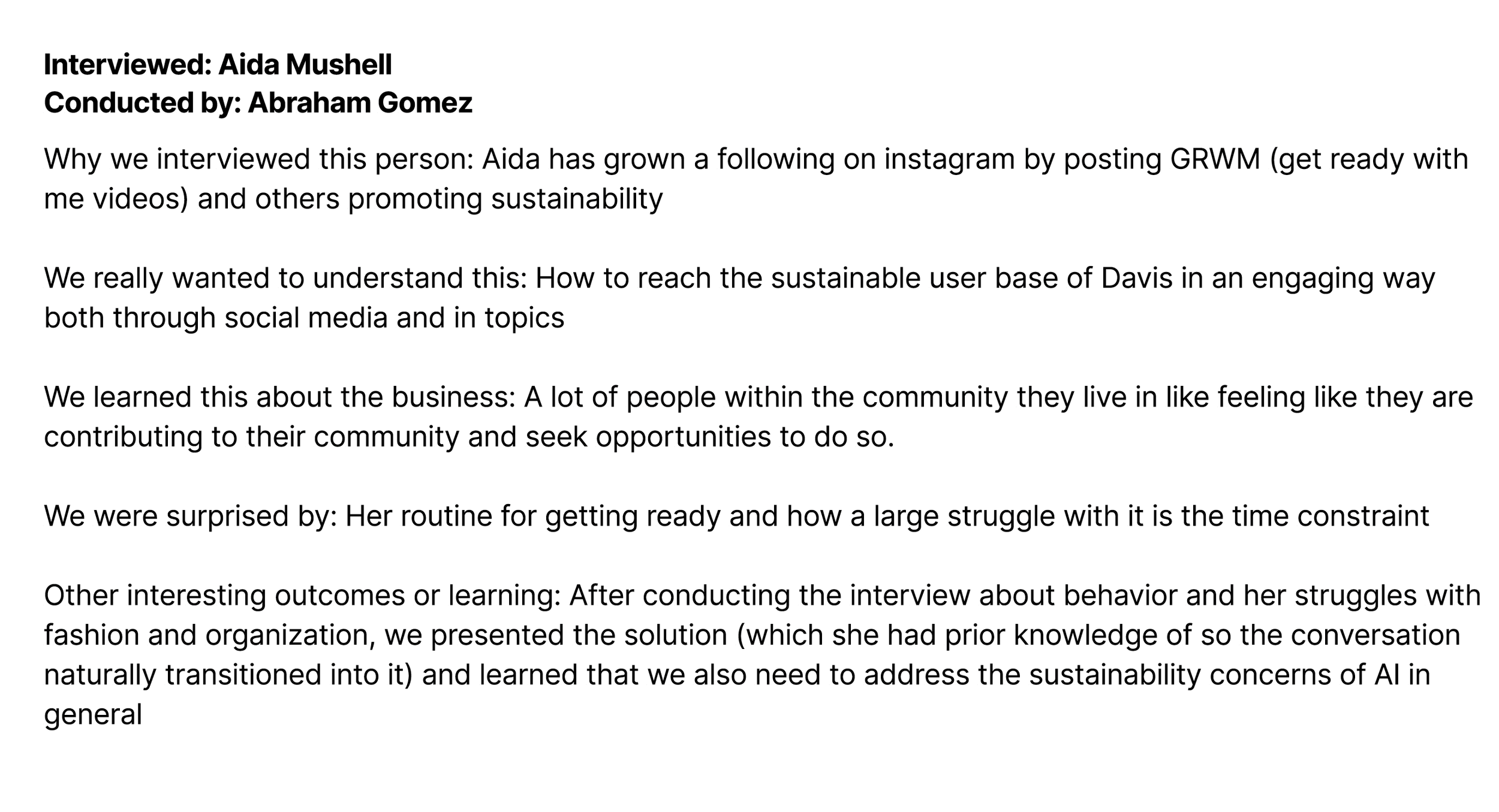
Example Interview
Check out the full I-Corps Doc, with interviews, here.
Growth & Development
06
Goal: Build momentum through community, credibility, and clearer storytelling around the startup.
What I did: Strengthened our go-to-market foundation through accelerator-style feedback, founder networks, and real-world conversations.
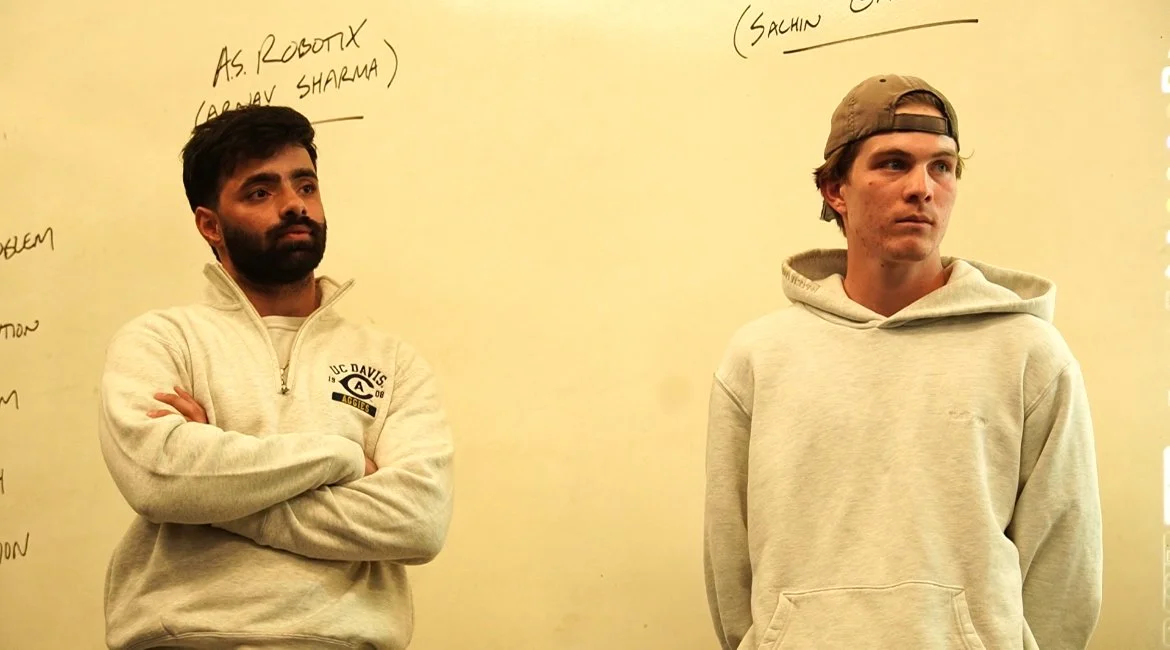
How: Partnered with the UC Davis Startup Center to improve our pitch and think about the startup holistically alongside other entrepreneurs. Attended tech events to learn from experienced founders and expand our community, including TiE in San Francisco, where we not only networked but competed and pitched live to attendees.
Outcome / learning: At TiE, we placed 2nd out of 24 startups—a strong validation of our narrative and positioning. Biggest learning: growth accelerates when your story is repeatable, your pitch is sharp, and you consistently put the product in front of people who will challenge it.
Currently…
In July, we intentionally paused Closet Compass after graduation when our TiE connections led to an opportunity at nSpire AI, where I now lead growth. I’m using this chapter to sharpen the skills that matter most for building a startup long-term: product clarity, customer truth, distribution, and execution under real constraints. Closet Compass remains a meaningful project for me—this stage is about gathering the experience to return to it stronger.